Summer & Fall 2026 Market Update: What Vancouver Island Booking Trends Mean for Your Property

aerial photo of a large oceanfront home on Vancouver Island with the surrounding foliage transitioning from summer to fall

The Homeowner Collection

A look at summer performance, fall demand, and what continues to separate strong-performing homes from the rest

By The EMR Vacation Rentals Team

Every season brings shifts in how travellers plan and book, and this year was no exception. Below, we walk through what happened with demand across June and July, what the numbers are showing for fall, and why the properties that keep performing well tend to have a few things in common. As always, this update is meant to give you context, not just numbers, so you can make informed decisions about your home heading into the fall season.

If you have questions about how any of this applies to your specific property, your Property Manager is a great place to start.

Talk to the Team

Summer Demand Took an Unusual Shape

June demand was softer than expected this year, largely due to the World Cup. The tournament pulled some travellers toward host cities while discouraging others from booking around the crowds and disruption. July told a different story, rebounding strongly and tracking closely with July 2025. Across both months, average length of stay came in at 4.5 nights, down from 4.8 nights over the same period last year. Guests were still booking, but trimming their stays a little shorter than they had the previous summer.

Avg. Length of Stay (Nights) — June through September

6
4
2
0
4
5.2
5.2
4.8
4.8
4.8
4.2
4.4
4.3
3.8
3.9
3.8
June
July
August
September
2026 (as of Aug 26)
2025 (same point)
2025 (full month)

Fall Is Off to a Strong Start

September occupancy is currently outpacing last September by 12.7 percent. Part of this is a calendar effect: the US Labor Day long weekend falls at the start of September this year rather than late August, shifting that travel window into the month. October and November are holding steady with last year’s pace so far.

Adj. Paid Occupancy % — June through September

100%
75%
50%
25%
0%
63.3%
71.6%
71.6%
83.6%
82.6%
82.6%
83.3%
91.5%
95.1%
60.2%
48.7%
76%
June
July
August
September
2026 (as of Aug 26)
2025 (same point)
2025 (full month)

Quality Continues to Set Homes Apart

One thing we often notice, regardless of whether overall demand is up or down, is that certain homes consistently hold their occupancy while others struggle. Location plays a large role, but so do amenities and review scores. Homes that are well maintained and well reviewed tend to keep booking steadily, while homes that fall behind on small details are usually the first to see a slowdown and remain the slowest to recover once demand picks back up.

From Our Property Managers

We regularly encourage homeowners to consider even small wear and tear, a stiff cabinet hinge, a slow drain, worn patio furniture, as something guests notice even if they don’t mention it in a review.

A Good Time to Take Stock

Corporate regulatory and compliance. Goals achievement and business success. Task completion. Wooden cube with check mark icon. Copy space

With fall demand building, this is a practical moment to walk through your property with a fresh eye. Consider it a short seasonal check-in rather than a big project. From the homes we manage, the ones that perform consistently well are usually the ones where small issues get addressed before they become guest complaints.

A Few Questions Worth Asking Yourself

  • Is there anything in the home that’s been “on the list” for a while?
  • Are there any amenities that could use an update or replacement?
  • When did you last see the property in person, or ask your Property Manager for a walkthrough summary?

From Our Property Managers

Your Property Manager may be able to share another perspective on what guests have mentioned recently, even informally, that’s worth acting on. We’re always glad to talk through what you’re seeing on your end. Reach out to your Property Manager or the EMR team any time you’d like a second perspective on your home.

A Few Questions Homeowners Often Ask

Is fall really shaping up better than last year?

September is currently ahead of last year by 12.7 percent in occupancy, with October and November tracking steady so far.

Why did length of stay drop this summer?

The exact reasons behind a shift like this are hard to pin down with certainty, but a slightly shorter average stay doesn’t signal weaker demand. Occupancy and booking activity stayed strong through July, guests were simply spreading their travel across shorter trips rather than staying away. For homeowners, this is worth noting mainly because it can mean more frequent turnovers during peak weeks, which is one more reason a smooth, well-maintained guest experience matters.

What can I do to make sure my property performs well this fall?

Reviewing your home for small maintenance or amenity updates is a good place to start. Your Property Manager can help you prioritize based on what they’ve observed at your property.

Looking Ahead

Salishan Chief Suite Main Image

Fall is shaping up to be a strong season, and the homes that make the most of it will likely be the ones where the details are already in order. Booking demand will keep shifting from month to month and year to year, but the properties that consistently perform well tend to share the same traits: a well-kept home, thoughtful amenities, and a solid reputation with guests. Getting ahead of small updates now is one of the most straightforward ways to make sure your property is positioned well as fall bookings continue to build.

Small updates now can help your property stay competitive as fall demand builds.

Talk to Your Property Manager

Why You Should Consider Making Your Vacation Rental Pet Friendly

Woman enjoying a cozy moment with her black dog on the couch

The Homeowner Collection

How welcoming responsible pet owners can broaden your property’s appeal, strengthen guest experiences, and support stronger long-term performance.

By EMR Vacation Rentals

If you’ve ever wondered whether making your vacation rental pet friendly is worth it, you’re certainly not alone. It’s one of the questions we hear most often from homeowners. More travellers than ever are looking specifically for accommodations where their pets are welcome, often before they compare location, amenities, or even price.

In our more than 20 years of managing vacation rentals across Vancouver Island, we’ve seen how welcoming pets can open a home to a broader group of travellers while still protecting what matters most: your investment. Like any decision you make about your property, it’s about weighing the benefits, understanding the responsibilities, and deciding whether it’s the right fit for your home.

We put this guide together to help you do exactly that.

Thinking About Making Your Home Pet Friendly?

Every property is different, and becoming pet friendly isn’t the right choice for every home. If you’re considering it but aren’t sure where to start, we’d be happy to share what we’ve learned from managing pet-friendly vacation rentals across Vancouver Island.

Reach Out to the Team

In This Article

Pet-Friendly Homes Reach More Travellers

Every guest has a checklist when they’re searching for a vacation rental. For many travellers, “pet friendly” is one of the very first boxes they tick.

Focused girl in headphones using mobile phone while lying with her dog on bed at home

Travelling with pets has become increasingly common, and for many families, leaving the dog behind simply isn’t an option anymore. If your property doesn’t allow pets, there’s a good chance those guests won’t even see your listing because it never appears in their search results.

We see this all the time on Vancouver Island. Many of our guests arrive by car via BC Ferries or drive from elsewhere in British Columbia, Alberta, Washington, and beyond, making it easy to travel with their pets. We also welcome guests staying for relocations, insurance claims, home renovations, work assignments, and extended stays. In many of these situations, bringing the family dog isn’t just something they’d like to do. It’s part of the move.

While every property performs differently, industry research continues to show that pet-friendly vacation rentals often experience stronger booking demand than comparable homes that don’t allow pets. The reason makes sense. When more travellers are able to consider your property, you naturally create more opportunities for bookings. It’s less about promising higher revenue and more about making sure your home is visible to guests who are already looking for exactly what you offer.

From Our Property Managers

We’ve found that guests travelling with pets tend to be very intentional about the homes they choose. They aren’t just looking for somewhere that allows dogs. They’re looking for a home that’s genuinely prepared to welcome them. That’s especially true for many of our longer-stay guests who are relocating, renovating, or travelling for work. For them, bringing the family dog isn’t a luxury. It’s simply part of everyday life.

Ask Yourself…

  • Could your home comfortably accommodate responsible pet owners?
  • Are you unintentionally missing out on guests who never even see your property?
  • Would allowing pets fit with your long-term goals for your vacation rental?

Pet Friendly Doesn’t Mean Giving Up Control

One of the biggest misconceptions we hear is that allowing pets means giving up control over how your home is used. In reality, the most successful pet-friendly vacation rentals are the ones with the clearest expectations.

Checklist on a clipboard, representing the importance of clear pet policy guidelines

As the homeowner, you decide what works for your property. You might choose to limit the number of pets, set size restrictions, ask that pets stay off the furniture, or require that they never be left unattended. The goal isn’t to create a long list of rules. It’s simply to help guests understand what’s expected before they arrive.

In our experience, responsible pet owners appreciate clear guidelines. They’re travelling with an important member of their family and want to know they’re staying somewhere that’s thoughtfully managed.

The good news is that you don’t have to figure it all out on your own. We’ve helped many homeowners create practical pet policies that protect their homes while making guests feel welcome.

Another concern we hear from homeowners is whether pets will cause more damage. That’s why we take guest screening seriously, provide guidance on clear pet policies, and work with homeowners to set expectations before every stay. On the rare occasion that an issue does arise, we’re here to help resolve it quickly. Our homeowners are also backed by EMR’s Peace of Mind Coverage, which provides up to $10,000 in additional guest damage protection, giving you another layer of confidence when welcoming guests into your home.

From Our Property Managers

One thing we’ve learned over the years is that clear communication solves most problems before they ever happen. When guests know what’s expected, they’re usually more than happy to respect your home.

Keep in Mind

One of the biggest advantages of working with EMR is that you’re never managing these decisions on your own. We’ll help you establish practical guidelines, communicate them clearly with guests, and support you from booking through departure.

Small Upgrades Can Make a Big Difference

Turning your vacation rental into a pet-friendly home doesn’t mean taking on an expensive renovation. In fact, some of the improvements guests appreciate most are also some of the easiest to add.

Feeding bowls and toys for pet on light blue background

A basket with dog towels by the door, food and water bowls, waste bags, an extra leash, or even a few locally made dog treats can make guests feel immediately at home. If your property has an outdoor tap or hose, creating a simple spot to rinse muddy paws after a walk can also be a welcome addition. We also recommend sharing a few local favourites, whether it’s a nearby off-leash park, a dog-friendly beach, a scenic walking trail, or the closest veterinarian.

If you’re already planning renovations, durable flooring may be worth considering. Otherwise, don’t feel like you need to change perfectly good finishes just to welcome pets. We’ve found that thoughtful, practical touches often have a much bigger impact than expensive upgrades.

From Our Property Managers

The homes that work best for pets aren’t the ones with the biggest budgets. They’re the ones where homeowners have thought about the little things that make life easier, whether that’s somewhere to wipe muddy paws after the beach or a safe place to store a leash before heading out for the day.

Guests Appreciate…

  • Somewhere to wipe muddy paws.
  • Easy access to outdoor spaces.
  • Food and water bowls.
  • A few thoughtful touches that make travelling with a pet feel just a little easier.

A Better Experience for Guests and Their Pets

One of the nicest things about travelling with a dog is that they get to be part of the adventure. One of the hardest parts is finding a place where everyone feels comfortable from the moment they arrive.

Close up of woman at home in a winter jumper reading a book while stroking her pet French Bulldog

For many guests, bringing their dog means they can truly relax. They don’t have to worry about arranging pet sitters, boarding kennels, or leaving an important member of the family behind. Instead, they can focus on enjoying their holiday together.

That peace of mind starts before they even arrive. Choosing a home that welcomes pets often gives guests confidence that they’ll feel comfortable during their stay. When they arrive and discover a home that’s been thoughtfully prepared, it simply reinforces that they’ve made the right choice.

As homeowners, it’s easy to focus on the house itself. Guests, however, remember how staying there made them feel. Making life a little easier for someone travelling with their pet is one of those small gestures that often becomes part of the story they take home with them.

From Our Property Managers

For many travellers we’ve spoken to, a dog isn’t just a pet, they’re part of the family. The best pet-friendly vacation rentals don’t simply allow dogs. They make travelling together feel easy. Thoughtful touches, clear expectations, and a home that’s genuinely prepared to welcome pets can make all the difference!

Not Every Home Should Be Pet Friendly

We know not every vacation rental should allow pets, and that’s perfectly okay.

Some homes simply aren’t the right fit. Strata bylaws may prohibit pets, your property may be in a wildlife-sensitive area, or you may have delicate landscaping or furnishings that you’d rather not risk.

Sometimes it simply comes down to your own comfort level as a homeowner.

The important thing is to make the decision intentionally. Rather than following trends, think about your property’s strengths, the type of guests you’d like to attract, and your long-term goals for your investment.

For some homes, becoming pet friendly is a natural fit. For others, it isn’t.

From Our Property Managers

A pet-friendly policy doesn’t have to be permanent. If you’re curious about how it might work for your property, consider trying it for a season or a defined period of time. That gives you the opportunity to evaluate the experience and decide whether it’s the right long-term fit.

Worth Considering

Think about the type of guests your home naturally attracts. If you regularly welcome families, longer-stay guests, or travellers exploring Vancouver Island by car, becoming pet friendly may be a natural fit. With clear expectations and the right support, many homeowners find it’s a much smaller operational change than they first imagined.

One Last Thought

One thing we’ve learned over the years is that successful vacation rentals don’t stand still. They evolve as guest expectations change.

If your home is a good fit for pets, becoming pet friendly may be one of those changes that’s worth considering. It’s a simple way to welcome a broader range of travellers while staying true to what makes your property unique.

Let’s Talk About Your Home

If you’ve been thinking about making your vacation rental pet friendly, we’d love to help you explore whether it’s the right fit. We can talk through practical considerations, share what’s worked well in similar homes, and help you decide what makes the most sense for your property and your goals.

Reach Out to the Team

Frequently Asked Questions

Does allowing pets guarantee more bookings?

No. There are never guarantees when it comes to vacation rental performance. That said, the industry data is remarkably consistent. Pet-friendly vacation rentals generally experience stronger booking demand than comparable homes that don’t allow pets because they’re visible to a larger pool of travellers. While results vary from property to property, becoming pet friendly has repeatedly been shown to improve occupancy potential and overall booking opportunities.

Will allowing pets lead to more damage?

It’s one of the first questions we hear from homeowners, and it’s a fair one. While no one can guarantee that accidents won’t happen, most guests travelling with pets are responsible owners who respect the homes they stay in. We carefully screen our guests, help homeowners establish clear pet policies, and support you throughout every booking. In addition, EMR’s Peace of Mind Coverage provides up to $10,000 in additional guest damage protection, giving homeowners extra confidence when welcoming guests with pets.

How do I know if becoming pet friendly makes sense for my property?

That’s exactly the conversation we like to have with homeowners. We’ll look at your property’s layout, location, guest profile, and any practical considerations to help you decide whether welcoming pets is a good fit. Sometimes the answer is yes, sometimes it’s no, but we’ll always give you honest advice based on what we’ve seen work over the years.

Vancouver Island Short-Term Rental Laws: 2026 Update

Harbourfront Executive Stay Main Image

What today’s regulations mean for vacation rental homeowners, why the rules continue to evolve, and how we help our homeowners stay ahead of the changes.

Last Updated: July 2026

British Columbia’s short-term rental regulations have changed significantly over the past two years, and for many homeowners, simply keeping up with the changes has become a challenge.

The good news is that you don’t need to become an expert in provincial legislation to own a successful vacation rental.

In our more than 20 years of managing vacation rentals across Vancouver Island, we’ve learned that homeowners aren’t looking to memorize legislation. They simply want to know whether their property is compliant, what has changed, and whether anything requires their attention. That’s where having an experienced local property management team can make all the difference.

Whether you’ve trusted EMR Vacation Rentals with your home for years, are considering purchasing another investment property, or know someone looking for guidance before entering the vacation rental market, understanding today’s regulatory landscape is an important part of protecting your investment.

This guide explains what has changed in 2026, how provincial legislation and municipal bylaws work together, and what homeowners should know moving forward.

Keeping Up With Changing Regulations Doesn’t Have to Be Your Job

Whether you already own a vacation rental or are considering adding another property to your portfolio, our local team stays on top of changing provincial legislation and municipal bylaws so you don’t have to. We’re here to help homeowners make informed decisions and navigate today’s evolving regulatory landscape with confidence.

Get in Touch

Quick Look: What’s Changed in 2026?

  • The provincial principal residence requirement remains in effect across many Vancouver Island communities.
  • The provincial registration system is now fully operational and actively enforced.
  • Municipalities continue updating their own short-term rental bylaws based on local housing needs.
  • Annual opt-in and opt-out provisions now determine where provincial rules apply.
  • Several Vancouver Island communities remain exempt from the provincial principal residence requirement.
  • Provincial legislation establishes the minimum standard, but municipalities may introduce stricter regulations.

Why Vancouver Island Short-Term Rental Rules Feel More Complicated Today

If owning a vacation rental feels more complicated than it did a few years ago, you’re not imagining it.

One thing we’ve noticed over the past two years is that the questions homeowners ask have changed. When British Columbia first introduced its short-term rental legislation, most conversations focused on understanding the new provincial rules. Today, the questions are far more specific.

Homeowners want to know whether their property still qualifies, whether their municipality has introduced additional restrictions, and what changes they need to be aware of before welcoming their next guest.

That’s because provincial legislation is now only one piece of the puzzle. Municipal bylaws continue to evolve, annual reviews can change how the rules apply within a community, and neighbouring municipalities may take completely different approaches to short-term rentals.

The legislation has matured, but it hasn’t necessarily become simpler.

FROM OUR PROPERTY MANAGERS

One thing we’ve learned is that the legislation itself isn’t usually what causes confusion. It’s understanding how provincial rules interact with municipal bylaws. Two neighbouring communities can have very different requirements, which is why it’s important to look at every property individually rather than making assumptions based on nearby areas.


What Every Vancouver Island Vacation Rental Homeowner Should Know in 2026

Rather than trying to keep track of every legislative update, we encourage homeowners to focus on a handful of practical questions each year.

Before operating a vacation rental, purchasing another investment property, or recommending the opportunity to someone else, it’s worth confirming that you can answer “yes” to the following:

A Simple Homeowner Check

  • Is my property eligible under the current provincial legislation?
  • Does my municipality have additional restrictions or licensing requirements?
  • Is provincial registration required for my property?
  • Do I have any required municipal business licences or permits?
  • Does my listing information match my provincial registration?
  • Have any provincial or municipal rules changed since last year?

Answering these questions early can prevent unexpected compliance issues later and provide peace of mind that your property is operating within today’s regulations.

Keep in Mind

Think of compliance as an annual review rather than a one-time checklist. Regulations continue to evolve, and spending a few minutes reviewing provincial and municipal requirements each year is far easier than trying to resolve an issue after your property has already been listed.

For many homeowners, that’s where professional management provides real value. Rather than monitoring legislation, interpreting bylaws, and tracking registration requirements yourself, you have a team that follows these developments every day and lets you know when something affects your property.


How Provincial Rules and Municipal Bylaws Work Together

One of the biggest misconceptions we encounter is that reading the provincial legislation tells homeowners everything they need to know.

In reality, provincial legislation establishes the minimum standard, while municipalities retain the authority to introduce additional restrictions based on local housing priorities. For homeowners, the most restrictive rule always applies.

That means a property that appears to qualify under provincial legislation may still face additional municipal requirements, annual rental night limits, or restrictions on secondary suites depending on where it’s located.

Provincial RulesMunicipal Authority
Principal residence requirementMay impose annual rental night limits
Secondary suites generally permittedMay prohibit secondary or garden suites
Provincial registration requiredMay require local business licences
Province establishes the baselineMunicipality may introduce stricter bylaws

Understanding how these two levels of regulation work together has become one of the most important parts of operating a vacation rental successfully.

What This Means for Homeowners

Many homeowners assume that if the Province allows something, their municipality does too. In practice, that’s often not the case. Before purchasing a property or accepting bookings, it’s important to confirm both provincial requirements and local bylaws.


Why Short-Term Rental Regulations Continue to Change

British Columbia’s short-term rental legislation was designed to evolve alongside local housing conditions rather than remain fixed indefinitely.

Each year, eligible municipalities have the opportunity to review how the provincial principal residence requirement applies within their communities. Depending on local housing needs and vacancy rates, they may request to opt in or opt out of the provincial framework.

For homeowners, this means the regulatory landscape is no longer static. A community’s status today may not be the same next year, making it important to stay informed as regulations continue to evolve.

The annual review process follows a predictable schedule:

Annual Review Timeline

  • February 28: Municipal deadline for submitting opt-in or opt-out requests.
  • June 1: Approved opt-outs take effect.
  • November 1: Approved opt-ins take effect.

While the legislation itself has become more established, the way it applies across Vancouver Island will likely continue changing as municipalities refine their own approaches.

FROM OUR PROPERTY MANAGERS

We’ve found that most homeowners aren’t concerned about following the rules. They simply want to know when something changes that affects their property. Keeping up with those changes is part of what we do every day.


What Are the Provincial Short-Term Rental Rules in British Columbia for 2026?

For most larger Vancouver Island communities, the Province limits short-term rentals to a host’s principal residence, plus one secondary suite or one accessory dwelling unit located on the same property.

These provincial regulations now form the foundation of British Columbia’s short-term rental framework, but they are only part of the compliance picture.

Principal Residence Requirement

The Province defines a principal residence as the home where you ordinarily live and conduct your day-to-day life. It is typically the address used for government identification, taxes, insurance, and other official records.

Where the principal residence requirement applies, homeowners may generally operate short-term rentals within:

  • Their principal residence.
  • One secondary suite located on the same property.
  • One accessory dwelling unit, such as a detached garden suite or carriage house.

However, this is only the starting point. Municipal bylaws may introduce additional restrictions that are more limiting than provincial legislation.

What This Means for Homeowners

Determining how a property qualifies is one of the first questions we receive from homeowners, and the answer isn’t always straightforward. Every municipality has the ability to shape its own regulations, which means eligibility often depends on far more than the provincial legislation alone.

Provincial Registration

The provincial registration system is now fully operational, and eligible short-term rentals must maintain an active registration.

Registration is only part of the process, however. Information published on booking platforms must match the provincial registry, including the property’s address and registration details. Booking platforms now validate listings against the provincial registry, and listings with discrepancies may be removed or prevented from accepting new reservations until those issues are corrected.

For homeowners, compliance has become an ongoing responsibility rather than a one-time task.

Municipal Business Licences Still Matter

Provincial registration does not replace municipal licensing requirements.

Many Vancouver Island municipalities continue requiring their own business licences or operating permits before a property can legally accept short-term rental bookings.

This is another area where we regularly answer questions from homeowners. It’s easy to assume provincial approval automatically satisfies local requirements, but municipalities continue managing their own licensing and enforcement processes independently.


Municipalities with Significant Short-Term Rental Changes

Although many Vancouver Island municipalities generally align with the Province’s legislation, several communities have introduced or proposed bylaws that significantly change how short-term rentals may operate.

These are some of the communities homeowners should pay particularly close attention to.


Victoria

  • Principal residence required
  • Maximum 160 rental nights annually
  • Secondary and detached garden suites are not currently permitted for short-term rentals

Victoria continues to maintain one of the most detailed municipal regulatory frameworks on Vancouver Island.

While provincial legislation generally allows one secondary suite or accessory dwelling unit on the same property as a principal residence, Victoria has chosen a more restrictive approach.

Example: You live in a house in Victoria with a legal basement suite.

Although provincial legislation generally permits one secondary suite on the same property, Victoria does not currently allow that self-contained suite to operate as a short-term rental.

If you leave town for several weeks, however, you may rent your principal residence while you’re away, provided you remain within the City’s annual limit of 160 nights.


Oak Bay

  • Maximum 60 rental nights annually
  • One of Vancouver Island’s most restrictive municipal approaches

Oak Bay has adopted one of the Island’s strictest short-term rental frameworks.

Unlike Victoria, Oak Bay allows homeowners to use a secondary suite or detached accessory dwelling unit as a short-term rental, provided the owner lives on the property and all municipal requirements are met.

The trade-off is a significantly lower annual limit of just 60 overnight stays.

Example: A homeowner living in the main residence may rent a detached garden suite for short-term stays, but only up to the municipality’s annual limit of 60 rental nights.


Saanich

Current Status: Short-term rentals remain prohibited.

What’s Proposed

  • Principal residence short-term rentals
  • Up to 120 rental nights annually

Draft bylaws are expected to return to Council in early 2027.

For homeowners, this highlights an important distinction. Provincial legislation alone does not determine whether a property may legally operate as a short-term rental.

Example: Purchasing a home in Saanich because it appears to qualify under provincial legislation does not currently allow you to operate a short-term rental. Until new municipal bylaws are adopted, the existing prohibition remains in place.


Esquimalt

Current Status: Short-term rentals remain prohibited while new bylaws are being prepared.

Council Direction

  • Principal residence short-term rentals
  • Secondary suites
  • Garden suites
  • Maximum 90 rental nights per calendar year

The proposed bylaws have not yet been adopted.

Example: If approved, homeowners living in the primary residence could rent either a secondary suite or detached garden suite for up to 90 nights annually. That’s a different approach than neighbouring Victoria, demonstrating once again why municipal bylaws deserve just as much attention as provincial legislation.


Where Does the Provincial Principal Residence Requirement Apply on Vancouver Island?

The provincial principal residence requirement does not apply uniformly across Vancouver Island. While many larger municipalities fall under the legislation, several smaller communities remain exempt unless they choose to opt in through the Province’s annual review process.

Because these designations can change over time, we encourage homeowners to verify the current status of their municipality each year rather than relying on previous information.

Communities Where the Principal Residence Requirement Currently Applies

CommunityPrincipal Residence Requirement
VictoriaYes
SidneyYes
SaanichYes
EsquimaltYes
LangfordYes
ColwoodYes
NanaimoYes
ParksvilleYes
Qualicum BeachYes
CourtenayYes
ComoxYes
Campbell RiverYes

Communities Currently Exempt

CommunityCurrent Status
LadysmithExempt
Lake CowichanExempt
LantzvilleExempt
Gold RiverExempt
Port HardyExempt
Port McNeillExempt
Port AliceExempt
SaywardExempt
TahsisExempt
ZeballosExempt
TofinoExempt
UclueletExempt

FROM OUR PROPERTY MANAGERS

One thing that continues to surprise homeowners is how different neighbouring communities can be. Popular destinations like Tofino and Ucluelet are currently exempt from the provincial principal residence requirement, while nearby municipalities may operate under an entirely different set of rules. That’s why we always recommend confirming the regulations that apply to your property’s exact location.


Which Properties Are Exempt from the Principal Residence Requirement?

Not every accommodation falls under the Province’s principal residence requirement. The legislation recognizes that certain property types were never intended to function as long-term housing and therefore remain exempt.

Examples include:

  • Certain strata-titled hotels and motels
  • Timeshare properties
  • Qualifying fractional ownership properties
  • Home exchange arrangements
  • Seasonal accommodation that is not suitable for year-round living
  • Student housing operated by educational institutions
  • Employee housing operated by employers or non-profit organizations
  • Strata corporation guest suites
  • Accommodation provided through certain outdoor recreation operators

These exemptions apply only under specific circumstances and often include additional qualifying requirements.

If your property appears to fall into one of these categories, we recommend confirming the details before listing it as a short-term rental.


How EMR Helps Homeowners Navigate Changing Regulations

Owning a vacation rental has become more complex over the past few years, but that doesn’t mean homeowners need to become experts in provincial legislation and municipal bylaws.

That’s our job.

Most homeowners don’t have the time or desire to monitor provincial announcements, follow municipal council meetings, compare local bylaws, or interpret new regulatory requirements. They simply want confidence that their property continues operating within the latest rules.

At EMR Vacation Rentals, regulatory compliance is built into the way we manage every home.

Because we focus exclusively on Vancouver Island, we understand how regulations differ from one municipality to another. We stay informed about legislative changes, monitor updates that may affect the communities we serve, and communicate with homeowners when those changes have an impact on their property.

Beyond helping homeowners navigate changing regulations, we provide the full-service management that allows owners to enjoy the benefits of vacation rental ownership without managing every detail themselves.

Our Property Management Services Include

  • Revenue optimization and dynamic pricing
  • Professional marketing and guest communication
  • Housekeeping and maintenance coordination
  • Local guest support
  • Ongoing property oversight
  • Guidance as provincial and municipal regulations continue to evolve

FROM OUR PROPERTY MANAGERS

Over the years, we’ve worked with homeowners purchasing their very first vacation rental, others expanding their portfolio with an additional property, and many who have introduced friends or family members looking for trusted local management. Every property is different, but one thing remains consistent: having an experienced local partner makes navigating today’s regulatory landscape considerably easier.


One Last Thought

Short-term rental regulations will almost certainly continue evolving.

Municipalities will continue refining their bylaws, provincial legislation will continue adapting to changing housing conditions, and homeowners will continue seeing updates from time to time.

What shouldn’t change is your confidence in how your property is managed.

Owning a vacation rental should be rewarding, not overwhelming. Whether you’ve partnered with EMR for years or are simply considering what comes next for your investment, we’re here to help you navigate those changes with practical advice, local expertise, and the experience that comes from managing vacation rentals across Vancouver Island every day.

Questions About Your Property?

Whether you’re reviewing your property’s compliance, considering purchasing another vacation rental, or know someone looking for professional property management, we’d be happy to share our perspective and answer your questions.

Speak with Our Property Management Team


Frequently Asked Questions About Vancouver Island Short-Term Rental Rules

 
Does the principal residence requirement apply everywhere on Vancouver Island?

No. While the principal residence requirement applies throughout many larger municipalities, several Vancouver Island communities remain exempt under the current provincial regulations. Because eligible municipalities are reviewed annually, homeowners should confirm both provincial legislation and local bylaws before operating a short-term rental.

Can Vancouver Island municipalities have stricter short-term rental rules than the Province?

Yes. Provincial legislation establishes the minimum standard, but municipalities can introduce additional restrictions. These may include annual rental night limits, licensing requirements, restrictions on secondary suites, or, in some cases, prohibiting short-term rentals altogether.

Can I use a secondary suite or garden suite as a short-term rental?

It depends on where your property is located. Provincial legislation generally permits one secondary suite or accessory dwelling unit on the same property as your principal residence. However, municipalities may adopt more restrictive rules. Victoria, for example, does not currently allow self-contained secondary or detached garden suites to operate as short-term rentals, while other municipalities take different approaches.

Are bed and breakfasts still permitted?

Generally, yes. Traditional bed and breakfasts may continue operating provided the owner lives on the property as their principal residence and all applicable municipal bylaws are followed.

How often do short-term rental regulations change?

Provincial regulations are reviewed annually, while municipalities may update their own bylaws independently. We recommend reviewing the latest requirements each year before accepting bookings, renewing registrations, or purchasing another vacation rental property.

How to Make Your Vancouver Island Vacation Rental Stand Out

THE HOMEOWNER COLLECTION

Thoughtful improvements that help your home attract more guests, stronger reviews, and long-term success.

By EMR Vacation Rentals


What makes one vacation rental memorable while another is quickly forgotten?

WES10269 Main Image

In our 20 years of experience managing vacation rentals across Vancouver Island, we know that it isn’t the biggest budget or the newest furnishings that makes the difference. The homes that consistently earn strong reviews are the ones that feel intentional. They reflect their surroundings, are comfortable and easy to enjoy, and continue to evolve with guest expectations.

Today, travellers have so much choice when booking accommodations. Before booking, they’re comparing your property against dozens of others, often making decisions in just a few minutes. Every property is different, but over the years we’ve found ourselves returning to the same five considerations whenever we visit a home. They’re often where the smallest changes have the greatest impact on the guest experience and the long-term success of a home.

Thinking about updating your vacation rental?

Reach out to us! We’d be happy to help.

Contact Us


01

Reflect the Home’s Surroundings in Your Design

The best vacation rentals feel connected to the place they’re in.

Beachside deck outdoor living space.

One of the first things we notice is whether a home’s interior complements the experience guests came to Vancouver Island to have. An oceanfront home might lean into natural textures, lighter palettes, and an easy coastal feel, while a forest retreat often feels most inviting with warm woods, layered textiles, and comfortable gathering spaces. Rather than creating a themed space, focus on creating a home that feels authentic to its setting.

From Our Property Managers

One thing we’ve noticed is that guests don’t always remember the décor itself. They remember how naturally the home suited its surroundings.

Guests Love…

  • Homes that feel connected to their surroundings
  • Natural materials and authentic design
  • A memorable sense of place

02

Design for the Space You Actually Have

Every home has different strengths, and thoughtful design starts with understanding them.

Well appointed living room.

Large spaces can be just as challenging to furnish as smaller ones. Guests notice how a home flows, how comfortable it is to spend time in, and whether each area feels intentional. Large rooms benefit from natural gathering spaces that preserve their openness, while smaller homes rely on carefully chosen furniture that keeps the space feeling functional rather than crowded. Sometimes the biggest improvement isn’t buying something new. It’s making better use of what you already have.

From Our Property Managers

Some of the most memorable guest experiences come from the simplest improvements. Comfortable seating, good lighting and thoughtful details are mentioned in reviews far more often than homeowners expect.

Ask Yourself…

  • Does every room have a clear purpose?
  • Is the furniture helping the space feel comfortable and inviting?
  • Would a guest naturally use this area?

03

Decorate with Your Guests in Mind

Young family with a girl, spending time at home on the weekends. Loving family resting on the couch, playing, watching television.

Every homeowner brings their own style to a property, and that’s part of what makes each home unique. The goal isn’t to remove that personality. It’s to balance it with the expectations of the guests you’re hoping to attract.

One exercise we often suggest to homeowners looking to update their space is to browse luxury vacation rentals and boutique hotels. Without copying individual rooms or homes, look for the patterns instead. Comfortable furniture, cohesive styling, layered lighting, quality linens; these are the details that consistently create homes guests book again and again.

Keep in Mind…

Guests don’t book homes because they’re trendy; they book homes they can picture themselves enjoying. The most successful vacation rentals strike a balance between personality and broad appeal, creating spaces that feel distinctive without feeling overly personal.


04

Guests Remember the Details

Family in a bright home together, baking in the kitchen

Guests don’t always remember every piece of furniture, but they always remember how a home made them feel and how the space worked during their stay.

The details that generate great reviews are often surprisingly practical. Comfortable seating & cozy accents. Layered lighting. Handy places to charge devices. Somewhere to unpack a suitcase. Counter space in a well-equipped kitchen. Outdoor spaces that encourage guests to slow down. These don’t have to be expensive upgrades, they’re thoughtful touches that remove friction and help guests settle in from the moment they arrive.

From Our Property Managers

Many of the improvements that have the biggest impact on guest satisfaction are also some of the simplest.

Details that are Easily Overlooked:

  • Bedside charging
  • Comfortable reading light
  • Somewhere to unpack a suitcase
  • Plenty of seating
  • Outdoor spaces that invite guests to linger

These are the little details that quietly shape a great stay.


05

Keep Your Home Fresh

The highest-performing vacation rentals continue to improve over time.

Happy senior couple painting walls in new home, relocation concept.

Guest expectations change, and successful homes evolve with them. That doesn’t mean undertaking a major renovation every few years. More often, it’s about making thoughtful updates before a home begins to feel dated. Fresh paint, updated bedding, modern lighting, refreshed outdoor furniture, or replacing worn kitchen items can all help keep a property feeling current. Small improvements made consistently are almost always more effective than waiting until a home needs a complete overhaul.

From Our Property Managers

The homes that perform best over time rarely change overnight. Their owners make thoughtful improvements year after year, keeping the home fresh without losing its character.

Easy Ways to Refresh Your Space:

  • High-end linens and towels
  • Interior paint
  • Lighting
  • Patio furniture
  • New kitchen tools and small appliances
  • Decorative accents

You don’t need to renovate to make an impact, even small updates can keep your home feeling current.


One Last Thought

If you’re wondering where to start, here’s an exercise we often suggest: Imagine your home’s biggest selling feature disappeared for a moment. What would guests remember most about staying in your home?

Whether it’s an ocean view, a private hot tub, a peaceful forest setting, or an unbeatable location, every one of our vacation rentals has a “wow” factor that attracts guests. But once they’re through the front door, it’s everything else that shapes their experience.

In our experience, the strongest performing vacation rentals don’t rely on one standout feature. They combine great amenities with an experience that’s comfortable, effortless, and memorable.

Let’s Keep the Conversation Going

Young man talking on a smartphone at a table with an open laptop

Your vacation rental is always evolving, and so are guest expectations. Whether you’re thinking about refreshing a room, replacing furnishings, or simply looking for a second opinion, we’re here to help.

Reach out to the team the next time you have a question or are planning an update. We’d love to be part of the conversation.

Speak to the Team


Frequently Asked Questions

How often should I refresh my vacation rental?

We suggest a yearly review of your home, ideally in the spring, to make small updates before spaces begin to feel dated. Incremental improvements are often more effective than waiting for a major renovation or redecoration.

Do I need to renovate to improve guest satisfaction?

Not at all! Sometimes the smallest adjustments have the largest impact. Furniture layout, lighting, linens, and thoughtful styling are where we like to start.

Where should I start if I’m planning updates?

Start with the areas your guests use most, then reach out to us! We’re always happy to share our perspective and help you think through your next steps.

EMR Guest Services: A Better Way to Stay on Vancouver Island

Large cabin with peaked roof, large deck and lots of windows located in Sooke BC
When you book a vacation rental, you are not just choosing a home. You are choosing the experience that comes with it. At EMR Vacation Rentals, guest service is built into every part of the stay, from your first question to your final day. Whether you are visiting Vancouver Island for a short getaway or settling in for a longer stay, everything is designed to feel clear, supported, and easy. If you are looking for a stay where things simply work the way they should, you are in the right place.

Find a home that’s ready when you are.

panoramic image of a luxury deck in Westshore & Bear Mountain - fire pit, outdoor furniture stunning views Browse Vacation Rentals

What Makes Staying with EMR Different

Young businessman talking on the phone with a laptop on table in cafe EMR exists to remove the uncertainty that often comes with vacation rentals. Instead of navigating individual hosts, unclear instructions, or inconsistent quality, you are working with a professional team from start to finish. There is one point of contact. One standard. One experience. You always know who to reach, what to expect, and how things will be handled.


Before You Book: Real Support, Not Guesswork

Before booking, you should feel confident in what you are choosing. That means clear answers, accurate property details, and a team that is easy to reach. Whether you have a quick question or need help finding the right fit, EMR is available to guide you through the process without pressure. Blue castle on a light background. Concept of cyber security. Informational security.

Booking: Simple, Clear, and Secure

Booking your stay should feel straightforward. With EMR, it is. You know exactly what you are booking, what is included, and what happens next. For longer stays, relocations, or corporate travel, that clarity becomes even more important, and EMR ensures everything is aligned from the start.
 

Book direct for a smoother, more supported experience.

Book Direct with EMR

Arrival: Everything Ready When You Walk In

Young family with a girl, spending time at home on the weekends. Loving family resting on the couch, playing, watching television. Arrival should feel easy. You receive clear check-in instructions, and your home is prepared for immediate use. Clean, organized, and ready to live in. No setup required, no confusion on what to do next. And if something does not go as planned, support is there to help you quickly.

During Your Stay: Support That’s There When You Need It

During your stay, EMR strikes the right balance. You are supported, but not interrupted. If you have a question or need assistance, the team is available. If everything is running smoothly, you are left to enjoy your time without unnecessary check-ins or disruption. You are never coordinating with property owners or managing issues yourself. Everything runs through EMR.

If Something Goes Wrong: We Handle It

No stay is completely immune to the unexpected. What matters is how it is handled. When something comes up, EMR takes ownership from start to finish. You are heard, the issue is addressed clearly, and you are kept informed throughout the process. It is not about perfection. It is about accountability and follow-through.

Longer Stays: Built for Real Life

Smiling man communicating with his daughter while working on computer at home. For extended stays, your rental needs to function like a home, not a temporary setup. EMR properties are prepared for day-to-day living, with practical layouts, full kitchens, and the essentials needed for longer visits. Communication continues throughout your stay to ensure everything remains comfortable and on track.

Staying longer? Find a place that actually works for everyday living.

Explore Monthly Stays

What You Can Expect in Every EMR Home

Cleaning service worker wiping dust from furniture with rag and detergent with her colleague vacuuming in background Every EMR property is prepared to a consistent standard. Homes are professionally cleaned before arrival and fully furnished for real use, not just short visits. Kitchens are equipped for cooking, spaces are designed for comfort, and everything is set up so you can settle in immediately. For longer stays, additional services can be arranged to maintain that level of comfort over time.
Who EMR Is Designed For

EMR is best suited for guests who value clarity, reliability, and professional support.
  • Travellers who want peace of mind
  • Families who need a dependable home base
  • Corporate and relocation guests
  • Longer-term visitors who need a functional, comfortable space
If you are looking for a highly customized concierge experience or a fully hands-off rental, EMR may not be the right fit. But if you want a stay that is well-managed and consistently supported, it is exactly what you are looking for.

Where to Stay on Vancouver Island

From Victoria and the Saanich Peninsula to the Cowichan Valley, Parksville, Nanaimo, and the Comox Valley, EMR Vacation Rentals offers professionally managed homes in some of Vancouver Island’s most desirable locations.

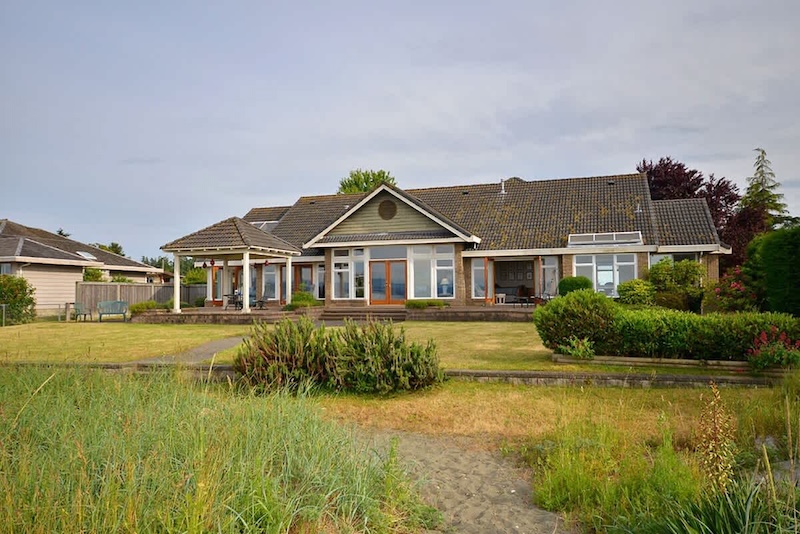
large, rancher style home on Vancouver Island - Columbia Beach House - EMR Vacation Rentals Each property is backed by the same service model, the same standards, and the same commitment to making your stay feel easy and well looked after.

Find your perfect home base with EMR Vacation Rentals and experience a better way to stay on Vancouver Island.

Winter Performance 2025 and Summer Projections 2026: How EMR Stays Ahead of the Curve

Home improvement. Incorporate modern technologies, enhance energy efficiency, safety concerns. Increase the resale property value.

The Vancouver Island vacation rental market has shifted over the past year, but it hasn’t slowed down. Instead, we’re seeing a more dynamic landscape where demand remains strong, but how and when that demand shows up is changing. For homeowners and investors, this creates both opportunity and complexity.

EMR vacation rental home

Learn More About EMR

At EMR Vacation Rentals, we closely track performance across our portfolio to understand where the market is heading and how to position each property for success.

Have a home or property you’d like to list? Get a free estimate today.

Get a Free Estimate
Speak to Our Team

Quick Look: What the Data Is Telling Us

  • STR demand is strong year-over-year
  • Bookings are happening closer to arrival
  • Peak travel periods are driving performance
  • Strategy and management now directly impact results

Winter 2025 Performance: Strong, But Not Linear

Winter 2025 performance graph

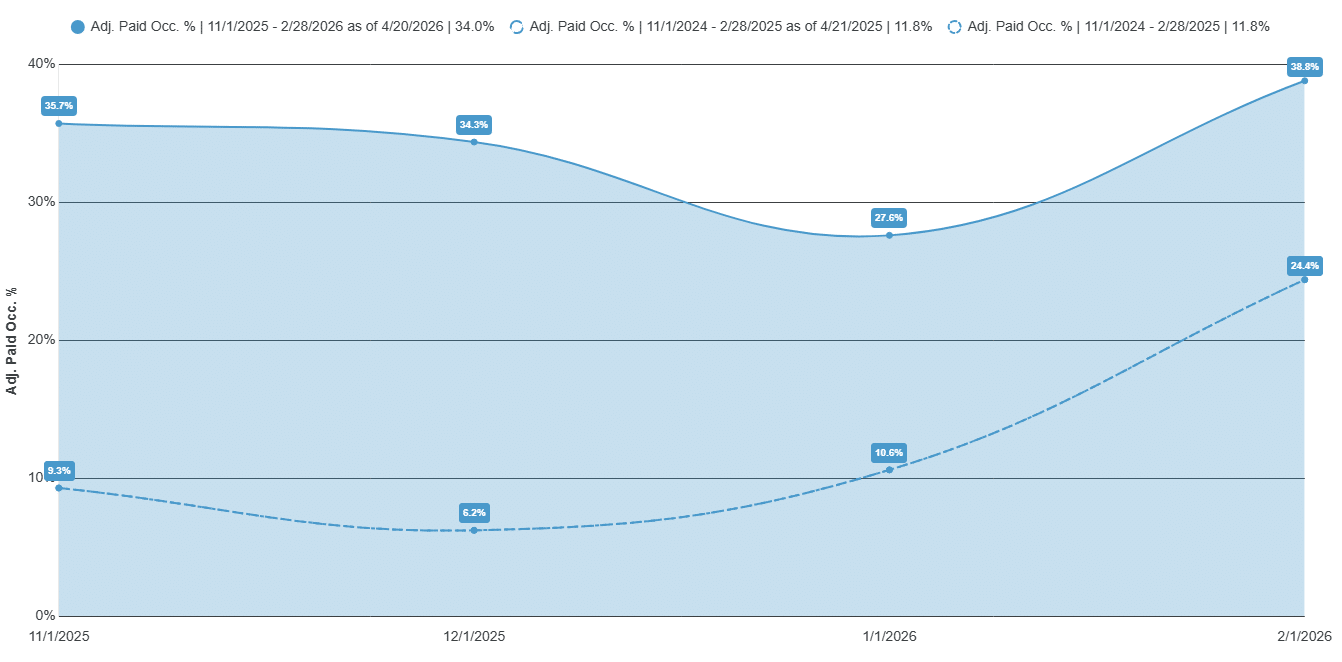
Winter 2025 showed a clear lift in short term rental performance compared to the previous year, with every month outperforming 2024. Early winter saw particularly strong gains, and while January dipped, February rebounded significantly.

This pattern points to an important shift. Demand remained active throughout the season, but it did not follow a predictable or evenly distributed path.

Instead, travellers booked later and moved between months, creating periods of compression followed by strong recovery. For homeowners, this reinforces that performance is no longer just about being listed. It is about being positioned to capture demand when it appears.

At the same time, this performance reflects short term rental activity specifically, highlighting that in areas where this model is permitted, it continues to deliver strong seasonal results.

What this shows homeowners

Demand remains strong, but it is more timing-sensitive. Properties need active pricing, strong positioning, and responsive management to capture bookings as they appear.

What Changed: Booking Behaviour Is Shifting

Looking deeper at the winter performance, the shape of the booking curve tells the real story. Compared to the previous year, demand is no longer building steadily over time. Instead, it’s compressing closer to arrival dates.

January’s dip followed by February’s strong recovery is a clear example. Demand didn’t disappear, it shifted. Travellers are waiting longer to commit, responding to factors like weather, pricing, and flexibility.

For homeowners, this changes how success is achieved. Static pricing and passive management are far less effective in this environment. Capturing demand now requires ongoing adjustments, strong listing presentation, and the ability to respond in real time.

This is where professional management becomes a key advantage. When booking behaviour becomes less predictable, the ability to adapt quickly is what drives consistent performance.

Summer 2026 Projections: Strength in Peak Season

Summer 2026 projections graph

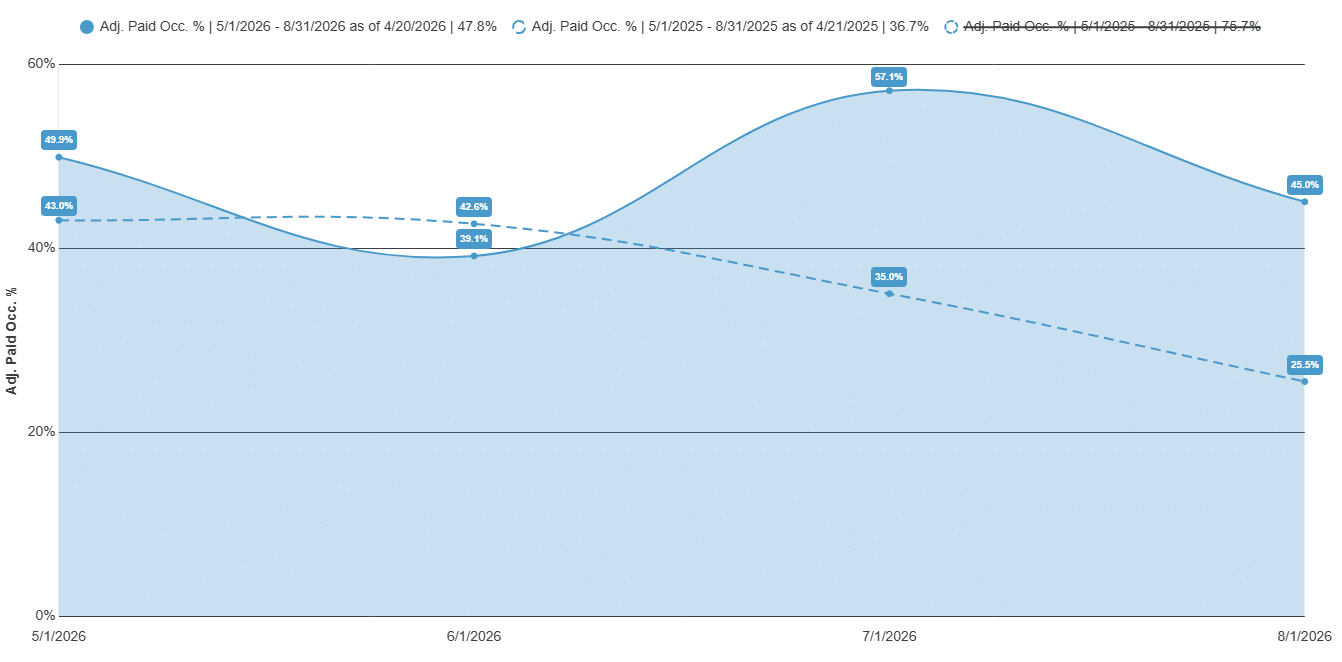
Looking ahead, Summer 2026 is already showing encouraging signs. Overall pacing is ahead of last year, particularly in the peak summer months of July and August, where demand is building more strongly than in 2025.

At the same time, June is tracking slightly behind, reinforcing a pattern we’re seeing more often. Travellers are prioritizing core summer weeks, concentrating demand into the most desirable periods rather than spreading it evenly across the season.

This creates a clear opportunity. Peak season remains highly valuable, but shoulder periods require a more intentional approach to pricing and positioning.

Much like winter, summer demand is still present, but it’s arriving in phases and often later in the booking window. For homeowners, this means that performance is less about early bookings and more about maintaining momentum and capturing demand as it develops.

What this means for Summer 2026

Peak demand is strong, but homeowners need a strategy for both high-demand windows and softer shoulder periods.

What Vancouver Island Rental Owners Should Know

The data is clear. Demand is still there, but the way it shows up has changed.

For homeowners, this means the opportunity hasn’t disappeared. It has become more nuanced. Performance now depends on aligning the right rental strategy with the right property, location, and market conditions.

Across Vancouver Island, we’re seeing two distinct but equally important paths emerge.

Own a Vancouver Island Vacation Rental

Short Term Rentals Where Permitted

Sunridge Beachside Retreat by EMR Vacation Rentals

In areas where short term rentals are allowed, performance remains strong. The winter data and summer projections both show that travellers continue to choose Vancouver Island for shorter stays, particularly during peak seasons.

These bookings are happening closer to arrival and are more sensitive to timing and pricing, which means success depends on how well a property is positioned and managed throughout the booking cycle.

Properties such as laneway homes, secondary suites, and principal residences continue to present strong opportunities in this space. For homeowners, the key is understanding whether a property qualifies and how to optimize it within current regulations. If you’re unsure where your property fits, connecting with a knowledgeable local team can help clarify your options and unlock its potential.

Monthly Stays 30+ Days

Vancouver Island monthly rental home

In areas where regulations require longer stays, monthly rentals offer a stable and effective way to generate revenue while remaining fully compliant.

These stays attract a wide range of guests, including relocating professionals, remote workers, students, and extended visitors, and provide more consistency across longer booking windows.

For many homeowners, this model offers a clear alternative to traditional long-term renting, without committing to fixed tenancy structures. It allows for flexibility while still generating steady income in a changing regulatory environment.

Understanding how this model performs, what kind of income to expect, and how to position a property correctly is where the right guidance becomes essential, particularly as regulations continue to evolve.

Why Professional Management Matters More Than Ever

Professional vacation rental management

As booking patterns shift, the difference between average and strong performance comes down to execution.

The winter data showed how quickly demand can move between months. Summer projections are already reinforcing how concentrated and timing-sensitive bookings have become. In this environment, success depends on more than simply listing a property.

It requires active pricing, strong presentation, and the ability to respond as demand develops. Capturing late bookings, optimizing peak periods, and maintaining performance through shoulder seasons all require a hands-on, informed approach.

This is where professional management plays a critical role.

Connect With Us

A Smarter Way to Invest in Vancouver Island Rentals

For homeowners and investors, the opportunity on Vancouver Island remains strong. Short term rentals continue to perform in permitted areas, and monthly stays provide a reliable path in regulated markets.

The key is making informed decisions from the start. Choosing the right location, understanding local regulations, and aligning the property with the right rental model all have a direct impact on long-term performance.

With the market becoming more complex, guidance is no longer optional. It is part of a successful investment strategy.

Where to Invest on Vancouver Island

EMR Vacation Rentals manages properties across some of the most desirable and well-positioned regions on Vancouver Island, including:

  • Victoria and the Saanich Peninsula
  • Sooke
  • Cowichan Valley
  • Parksville and Qualicum Beach
  • Nanaimo
  • Comox Valley

Each area offers a different mix of demand drivers, regulations, and opportunities, making local insight essential when choosing where to invest or how to position a property.

If you’re considering entering the market, or already own a home in one of these areas and are looking to improve performance, it’s worth having a conversation. Understanding what’s possible for your specific property is often the difference between average results and a well-performing rental.

Let’s Connect

Work With EMR Vacation Rentals

Navigating today’s vacation rental market requires a clear understanding of both opportunity and regulation.

EMR Vacation Rentals provides full-service management across Vancouver Island, helping homeowners position their properties for success whether through short term rentals or monthly stays. From initial guidance on where and how to invest, to ongoing management and optimization, EMR ensures each home is aligned with current market conditions and performing at its full potential.

If you’re considering a vacation rental on Vancouver Island or looking to improve the performance of an existing property, working with the right partner can make all the difference.

Speak to Our Team