

Winter Performance 2025 and Summer Projections 2026: How EMR Stays Ahead of the Curve

Home improvement. Incorporate modern technologies, enhance energy efficiency, safety concerns. Increase the resale property value.

The Vancouver Island vacation rental market has shifted over the past year, but it hasn’t slowed down. Instead, we’re seeing a more dynamic landscape where demand remains strong, but how and when that demand shows up is changing. For homeowners and investors, this creates both opportunity and complexity.

EMR vacation rental home

Learn More About EMR

At EMR Vacation Rentals, we closely track performance across our portfolio to understand where the market is heading and how to position each property for success.

Have a home or property you’d like to list? Get a free estimate today.

Get a Free Estimate
Speak to Our Team

Quick Look: What the Data Is Telling Us

  • STR demand is strong year-over-year
  • Bookings are happening closer to arrival
  • Peak travel periods are driving performance
  • Strategy and management now directly impact results

Winter 2025 Performance: Strong, But Not Linear
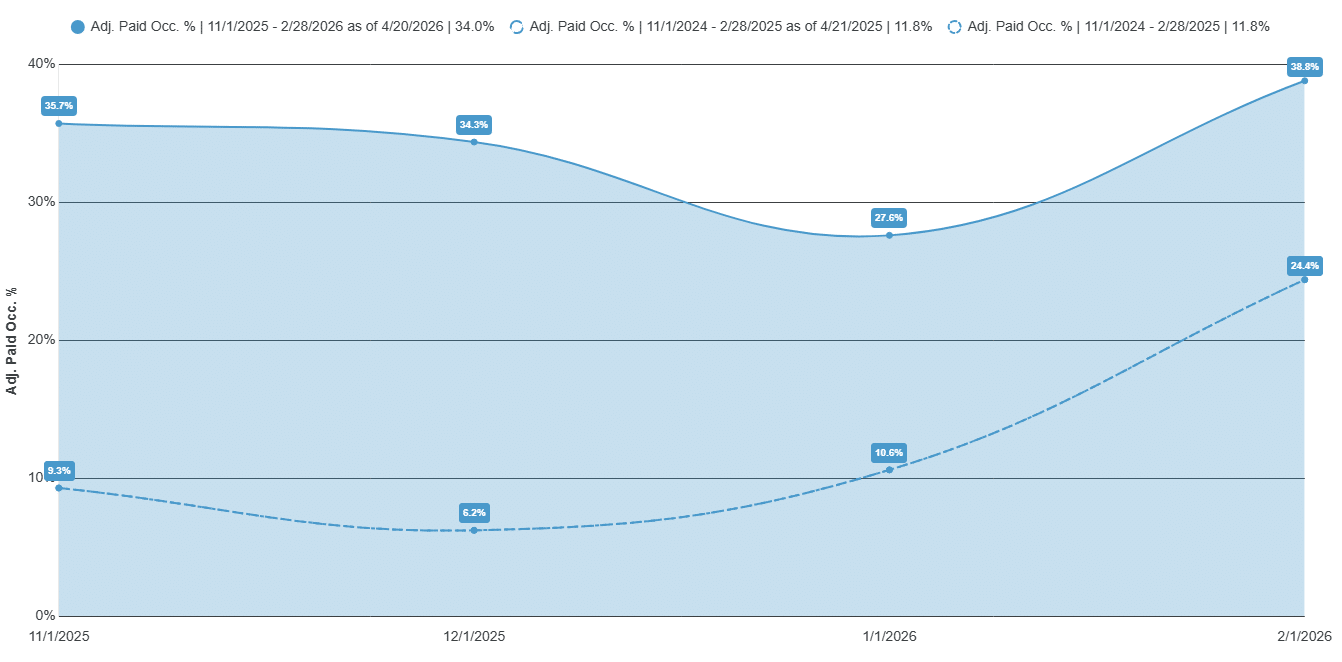
Winter 2025 performance graph

Winter 2025 showed a clear lift in short term rental performance compared to the previous year, with every month outperforming 2024. Early winter saw particularly strong gains, and while January dipped, February rebounded significantly.

This pattern points to an important shift. Demand remained active throughout the season, but it did not follow a predictable or evenly distributed path.

Instead, travellers booked later and moved between months, creating periods of compression followed by strong recovery. For homeowners, this reinforces that performance is no longer just about being listed. It is about being positioned to capture demand when it appears.

At the same time, this performance reflects short term rental activity specifically, highlighting that in areas where this model is permitted, it continues to deliver strong seasonal results.

What this shows homeowners

Demand remains strong, but it is more timing-sensitive. Properties need active pricing, strong positioning, and responsive management to capture bookings as they appear.

What Changed: Booking Behaviour Is Shifting

Looking deeper at the winter performance, the shape of the booking curve tells the real story. Compared to the previous year, demand is no longer building steadily over time. Instead, it’s compressing closer to arrival dates.

January’s dip followed by February’s strong recovery is a clear example. Demand didn’t disappear, it shifted. Travellers are waiting longer to commit, responding to factors like weather, pricing, and flexibility.

For homeowners, this changes how success is achieved. Static pricing and passive management are far less effective in this environment. Capturing demand now requires ongoing adjustments, strong listing presentation, and the ability to respond in real time.

This is where professional management becomes a key advantage. When booking behaviour becomes less predictable, the ability to adapt quickly is what drives consistent performance.

Summer 2026 Projections: Strength in Peak Season
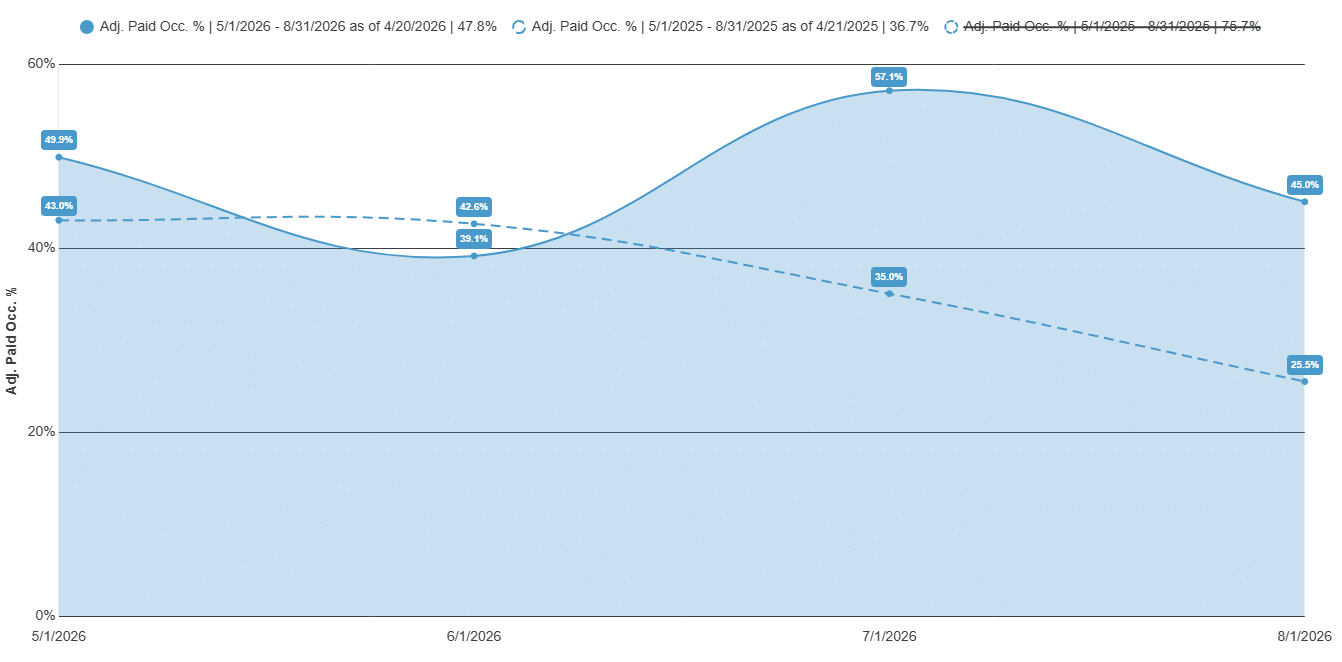
Summer 2026 projections graph

Looking ahead, Summer 2026 is already showing encouraging signs. Overall pacing is ahead of last year, particularly in the peak summer months of July and August, where demand is building more strongly than in 2025.

At the same time, June is tracking slightly behind, reinforcing a pattern we’re seeing more often. Travellers are prioritizing core summer weeks, concentrating demand into the most desirable periods rather than spreading it evenly across the season.

This creates a clear opportunity. Peak season remains highly valuable, but shoulder periods require a more intentional approach to pricing and positioning.

Much like winter, summer demand is still present, but it’s arriving in phases and often later in the booking window. For homeowners, this means that performance is less about early bookings and more about maintaining momentum and capturing demand as it develops.

What this means for Summer 2026

Peak demand is strong, but homeowners need a strategy for both high-demand windows and softer shoulder periods.

What Vancouver Island Rental Owners Should Know

The data is clear. Demand is still there, but the way it shows up has changed.

For homeowners, this means the opportunity hasn’t disappeared. It has become more nuanced. Performance now depends on aligning the right rental strategy with the right property, location, and market conditions.

Across Vancouver Island, we’re seeing two distinct but equally important paths emerge.

Own a Vancouver Island Vacation Rental

Short Term Rentals Where Permitted

Sunridge Beachside Retreat by EMR Vacation Rentals

In areas where short term rentals are allowed, performance remains strong. The winter data and summer projections both show that travellers continue to choose Vancouver Island for shorter stays, particularly during peak seasons.

These bookings are happening closer to arrival and are more sensitive to timing and pricing, which means success depends on how well a property is positioned and managed throughout the booking cycle.

Properties such as laneway homes, secondary suites, and principal residences continue to present strong opportunities in this space. For homeowners, the key is understanding whether a property qualifies and how to optimize it within current regulations. If you’re unsure where your property fits, connecting with a knowledgeable local team can help clarify your options and unlock its potential.

Monthly Stays 30+ Days

Vancouver Island monthly rental home

In areas where regulations require longer stays, monthly rentals offer a stable and effective way to generate revenue while remaining fully compliant.

These stays attract a wide range of guests, including relocating professionals, remote workers, students, and extended visitors, and provide more consistency across longer booking windows.

For many homeowners, this model offers a clear alternative to traditional long-term renting, without committing to fixed tenancy structures. It allows for flexibility while still generating steady income in a changing regulatory environment.

Understanding how this model performs, what kind of income to expect, and how to position a property correctly is where the right guidance becomes essential, particularly as regulations continue to evolve.

Why Professional Management Matters More Than Ever

Professional vacation rental management

As booking patterns shift, the difference between average and strong performance comes down to execution.

The winter data showed how quickly demand can move between months. Summer projections are already reinforcing how concentrated and timing-sensitive bookings have become. In this environment, success depends on more than simply listing a property.

It requires active pricing, strong presentation, and the ability to respond as demand develops. Capturing late bookings, optimizing peak periods, and maintaining performance through shoulder seasons all require a hands-on, informed approach.

This is where professional management plays a critical role.

Connect With Us

A Smarter Way to Invest in Vancouver Island Rentals

For homeowners and investors, the opportunity on Vancouver Island remains strong. Short term rentals continue to perform in permitted areas, and monthly stays provide a reliable path in regulated markets.

The key is making informed decisions from the start. Choosing the right location, understanding local regulations, and aligning the property with the right rental model all have a direct impact on long-term performance.

With the market becoming more complex, guidance is no longer optional. It is part of a successful investment strategy.

Where to Invest on Vancouver Island

EMR Vacation Rentals manages properties across some of the most desirable and well-positioned regions on Vancouver Island, including:

  • Victoria and the Saanich Peninsula
  • Sooke
  • Cowichan Valley
  • Parksville and Qualicum Beach
  • Nanaimo
  • Comox Valley

Each area offers a different mix of demand drivers, regulations, and opportunities, making local insight essential when choosing where to invest or how to position a property.

If you’re considering entering the market, or already own a home in one of these areas and are looking to improve performance, it’s worth having a conversation. Understanding what’s possible for your specific property is often the difference between average results and a well-performing rental.

Let’s Connect

Work With EMR Vacation Rentals

Navigating today’s vacation rental market requires a clear understanding of both opportunity and regulation.

EMR Vacation Rentals provides full-service management across Vancouver Island, helping homeowners position their properties for success whether through short term rentals or monthly stays. From initial guidance on where and how to invest, to ongoing management and optimization, EMR ensures each home is aligned with current market conditions and performing at its full potential.

If you’re considering a vacation rental on Vancouver Island or looking to improve the performance of an existing property, working with the right partner can make all the difference.

Speak to Our Team

B.C.’s Short-Term Rental Laws: Vancouver Island

The Lakehouse on Langford Lake Main Image

The world of short-term rentals in British Columbia is changing fast. With the rollout of the Short-Term Rental Accommodations Act in 2023 and the new provincial registry taking effect in 2025, compliance has become more complicated than ever. For many property owners, the rules can feel like a moving target. This can lead to fines, cancelled bookings, or even having listings removed.

In this blog, we will break down what the latest changes mean for short-term rental operators on Vancouver Island, highlight key dates and requirements, and show you how to protect your investment in this evolving landscape.

Not interested in trying to navigate the new STR laws alone? Tired from the stress of staying on top of every new date, policy change while still trying to maintain a passive income with your STR?

We can help.

At EMR, we take care of the licensing, registration, and platform requirements for you, ensuring your property stays fully compliant without the stress of navigating shifting regulations. Our expertise means you can focus on hosting and keep earning while we handle the paperwork and enforcement details.

Setting the Stage: Vancouver Island’s Housing Crisis

The story of B.C.’s housing crisis stretches back decades. In the mid-20th century, Canada built thousands of social housing units and supported purpose-built rentals through federal incentives. By the 1980s, governments began shifting their priorities. They pulled back funding, partly because of economic recessions, rising deficits, and a broader move toward neoliberal policies that favoured the private market. Housing was increasingly treated as a commodity rather than a public good. Without the subsidies and tax incentives, developers turned to condos and ownership models that offered higher returns and rental construction stalled. As demand grew, prices became inflated and international investment and speculation pushed prices even higher.

However, wages did not keep pace. By the mid-2010s, entire neighbourhoods were feeling the pressure. Families struggled to stay put. Young people delayed moving out on their own and homelessness crept upward.

On Vancouver Island, the strain is especially visible. Victoria’s vacancy rates hover near zero. Nanaimo and the Comox Valley see similar shortages. Seasonal tourism brings more demand, while retirees and investors add another layer of competition. For many Islanders, securing stable housing has become harder than ever.

It is in this climate that the Province introduced the Short-Term Rental Accommodations Act. The aim is straightforward: return more units to the long-term market. But for property owners, especially those on Vancouver Island, the reality is far more complex. What began as a response to a housing shortage has reshaped how short-term rentals can operate and forced operators to adapt to a new era of regulation.

Breakdown of B.C.’s Short-Term Rental Accommodations Act

In October 2023, Housing Minister Ravi Kahlon and Premier David Eby introduced the Short-Term Rental Accommodations Act to address British Columbia’s housing crisis. The government argued that the widespread use of entire homes as short-term rentals had worsened the problem. At the time, provincial estimates showed that more than 16,000 homes across B.C. were being used for short-term stays rather than long-term housing, creating additional scarcity for residents.

To counter this, the Act was introduced with several key measures that have been phased in between late 2023 and 2025:

Purpose of the Act

  • Give local governments stronger tools to enforce short-term rental bylaws.
  • Return short-term rental units to the long-term housing market.
  • Establish a new provincial role in short-term rental regulation.

Applicability

  • Covers short-term rentals listed publicly on platforms and booking forums.
  • Does not apply to certain categories such as reserve lands, hotels, or temporary shelters.

Enforcement Measures

  • As of May 1, 2024, a valid business licence number must be displayed on all listings.
  • Platforms are required to remove listings that do not display a valid licence.
  • Local government fines for bylaw offences have increased significantly.
  • Regional districts now have business licensing authority for short-term rentals.

Data Sharing

  • By summer 2024, short-term rental platforms were required to begin sharing listing data with the Province to support bylaw enforcement.

Returning Units to the Long-Term Market

  • Since May 1, 2024, short-term rentals have been limited to a host’s principal residence plus one secondary suite or accessory dwelling.
  • Protections for non-conforming use of property no longer apply to short-term rentals.

Provincial Oversight

  • The provincial short-term rental registry officially launched in July 2025.
  • All hosts, platforms, and strata hotel platforms must register and pay annual fees by May 1, 2025.
  • Enforcement of registry compliance begins in June 2025, with listings removed, new bookings blocked, and future bookings cancelled if registration is not completed.

Timeline of the Short-Term Rental Accommodations Act

  • October 26, 2023 – Act introduced by Housing Minister Ravi Kahlon and Premier David Eby.
  • February 29, 2024 – Deadline for municipalities to apply for exemptions (“opt out”).
  • March 31, 2024 – Deadline for municipalities not initially covered to apply to be included (“opt in”).
  • May 1, 2024 – Principal residence plus one secondary suite rule begins. Business licence numbers required on listings.
  • Summer 2024 – Platforms begin sharing data with the Province.
  • End of 2024 – Provincial registry prepared for launch.
  • May 1, 2025 – All hosts, platforms, and strata hotel operators must be registered and pay annual fees.
  • June 2, 2025 – Listings without valid registration removed. No new bookings allowed.
  • June 23, 2025 – Future bookings for unregistered properties cancelled.
  • July 31, 2025 – Province confirms registry enforcement procedures.
  • September 2025 – Full registry validation in effect. All listing details (address, unit number, postal code) must exactly match the provincial registry to remain active.

What Short-Term Rentals Are Still Allowed?

One of the biggest questions for property owners has always been: what is actually permitted? The answer shifted in May 2024, when the Province limited short-term rentals to a host’s principal residence plus one secondary suite or accessory dwelling.

In practice, this means that if you live in your home and also have a basement suite, a laneway home, or another self-contained unit on the property, you can continue to rent it out short-term. But operating multiple investment properties or listing entire homes that are not your primary residence is no longer legal in most communities.

There are exceptions. Some areas were allowed to opt out of the provincial rules, while others opted in voluntarily. This patchwork approach has added to the confusion, since the rules in one municipality may not apply just a few kilometres down the road.

What has not changed is the provincial expectation that all short-term rentals must be registered. Even if your property qualifies under the principal residence requirement, you must still register with the provincial system. Exemptions such as hotels, temporary shelters, or properties on reserve lands do not remove this responsibility.

For hosts on Vancouver Island, the message is clear: know the rules in your community, confirm that your property qualifies, and ensure you are properly registered. Missing even one step could result in your listing being removed and your income disappearing.

This is where EMR Vacation Rentals can make all the difference! We handle the details from licensing and  registration to compliance so you do not have to. Instead of worrying about shifting regulations, you can rely on EMR to keep your property fully compliant while you focus on welcoming guests and enjoying the benefits of your investment.

Remaining Issues and Unanswered Questions

Even with the registry in place, there are still gaps and uncertainties. Enforcement relies heavily on accurate data and precise platform validation, which means even small typos in an address can cause a listing to be taken down. Property owners are left wondering how smoothly the system will function when thousands of listings are processed at once.

The shift from a 30-day minimum stay to a 90-day minimum in opted-in zones has also disrupted the mid-term rental market. For students, travelling professionals, or families between homes, this change has reduced flexibility. On Vancouver Island, where universities and seasonal employment bring people for shorter periods, the impact is significant.

Legal questions remain as well. Some owners of properties originally zoned or built for short-term rentals argue they have been unfairly targeted. Class-action challenges have been discussed, though outcomes are uncertain. Add in the political uncertainty of future elections, and there is no guarantee that today’s rules will remain unchanged tomorrow.

For many individual hosts, this uncertainty is overwhelming. Compliance is not just about following the law; it is about protecting income, avoiding cancellations, and staying competitive in a crowded market.

That is why more owners are turning to EMR Vacation Rentals. Our team stays ahead of every policy update, monitors changes at both the provincial and municipal levels, and ensures that properties remain compliant. Instead of worrying about whether a new regulation will upend your plans, you can depend on EMR to handle the details and safeguard your investment.

What to Do If Your Listing Is Removed

1. Confirm your registration

Log in to the provincial short-term rental registry. Make sure your registration is active and not expired. Write down your registration number, street address, unit number if applicable, and postal code exactly as they appear.

2. Match your details

Update your listing on Airbnb, VRBO, or other platforms so that the information matches the registry word for word. Even small typos or formatting differences can cause validation to fail.

3. Fix registry errors if needed

If the registry itself contains incorrect information, request a correction through the Province before trying to update your platform listing.

4. Resubmit your listing

Once your details align, your listing should be reinstated. Larger platforms usually validate automatically. For smaller ones, you may need to contact support directly.

5. Manage bookings

Cancelled future bookings cannot always be restored, but once validation is complete you can accept new ones.

6. Consider professional help

Validation can be stressful and time consuming. EMR Vacation Rentals manages registration, monitors compliance, and handles errors directly with the Province and booking platforms, so your property stays online and earning.

Navigating the Future of Short-Term Rentals on Vancouver Island

The Short-Term Rental Accommodations Act has reshaped how vacation rentals operate across British Columbia. From principal residence requirements to the provincial registry, the rules now demand attention to detail and a willingness to adapt. For property owners on Vancouver Island, compliance is not optional. It is the foundation of protecting income, preventing cancellations, and staying competitive in a fast-changing market.

Staying compliant with B.C.’s short-term rental rules can feel overwhelming, but you don’t have to do it alone! EMR Vacation Rentals ensures that every home in our portfolio meets the latest provincial and municipal requirements, giving you peace of mind and reliable income without the administrative headaches.

Ready to simplify your short-term rental management? Contact EMR Vacation Rentals today and let us handle compliance, so you can focus on enjoying the benefits of your property.

B.C.’s Short Term Rental Laws: Vancouver Island

small model of a house and a house key on a table

The profitable world of short-term rentals in British Columbia, Canada, is undergoing a significant transformation with the enactment of the Short-Term Rental Accommodations Act. As this legislation takes centre stage in BC’s news cycle, Canadians who rent and international students are no doubt hoping that these changes will make it easier to find affordable rental housing on Vancouver Island. On the other side of the coin, British Columbians who have been successful short-term rental operators who have been attempting to decipher the complexities of the act have found it to be like doing a 5000 piece puzzle without turning the pieces over – leaving numerous important questions unanswered.

This blog post aims to untangle the complexities of B.C.’s short-term rental legislation, shedding light on what these changes mean for property owners on Vancouver Island, how they may be affected by local governments’ bylaws, and suggesting steps to navigate this evolving landscape. Additionally, it will address the implications of the crackdown on owners listing their short-term rental units on sites like Airbnb and VRBO and the broader effects on the Canadian rental market in the Province.

Breakdown of B.C.’s Short-Term Rental Accommodations Act 

Housing Minister Ravi Kahlon and Premier David Eby introduced B.C.’s short-term legislation in order to address British Columbia’s housing crisis which–according to the BC government–has been exacerbated by the widespread use of entire homes for short-term rentals. According to the information provided, there are 16,000 homes across BC that are used for short-term rentals rather than long-term rentals creating scarcity for appropriate long-term rentals for residents. To counter this, the Short-Term Rental Accommodations Act has been introduced with the following key points:

Purpose of the Act:

  • Empower local governments with tools to enforce short-term rental bylaws.
  • Reintegrate short-term rental units into the long-term housing market.
  • Establish a new Provincial role in short-term rental regulation.

Applicability:

  • Covers short-term rentals offered to the public via various platforms and listing forums.
  • Does not apply to certain categories like reserve lands, hotels, or temporary shelters.

Enforcement Measures:

  • Local government fines for bylaw offences have increased significantly.
  • Regional districts now have business licensing authority for short-term rentals.
  • Display of a valid business licence number on listings is mandatory as of May 1, 2024.
  • Short-term rental platforms must remove listings without a valid business licence.

Data Sharing:

  • Short-term rental platforms are expected to share information about listings with the Province by summer 2024.
  • The Province will maintain confidentiality but use the data for bylaw enforcement.

Returning Units to Long-Term Market:

  • As of May 1, 2024, short-term rentals are limited to the host’s principal residence plus one secondary unit.
  • Protections for non-conforming use of property will no longer apply to short-term rentals.

Provincial Oversight:

  • A short-term rental registry will be established by late 2024 or early 2025.
  • A provincial compliance and enforcement unit will be formed to ensure adherence to rules.

Timeline:

  • Various regulations will be phased in between October 26, 2023, and late 2024.

Short-Term Rentals vs. Tenancies:

  • Generally not covered under the Residential Tenancy Act, but there may be exceptions.
  • Legal advice is recommended for uncertain accommodation arrangements.

Policy Guidance for Local Governments:

  • Local governments can access policy guidance for implementing the Short-Term Rental Accommodations Act.

Important Dates

February 29, 2024:

Deadline for cities and towns to submit requests to “opt out” or request special “carve outs” from the BC Short Term Rental Accommodation Act.

March 31, 2024:

Deadline for areas not initially covered by the Act to submit requests to “opt in” and be subject to the new regulations.

May 1, 2024:

Deadline for property owners, especially in captured municipalities, to cease accepting new short-term rental stays for less than 90 days on booking platforms or their websites.

End of 2024:

Expected completion of the mandatory provincial short-term rental registry, a crucial tool for tracking data on short-term rental locations and ownership status.

Late 2024 or Early 2025:

Anticipated launch of the provincial short-term rental registry.

Expected timeframe for effective enforcement, according to opposition parties, as the registry becomes fully operational.

While these dates highlight key milestones in the implementation and enforcement of BC’s new short-term rental regulations, readers should stay vigilant for any updates or changes to the timeline from official government sources.

What Short Term Rentals Will Be Allowed?

According to the new legislation, as of May 1, 2024, the Province will limit short-term rentals to the host’s principal residence plus one secondary suite or accessory dwelling. This means that if you have a basement or attic suite or a laneway home on the property of your principal residence, you are able to use those spaces as short-term vacation rentals. 

However, this doesn’t apply everywhere! For those areas that are not listed or who have successfully opted out, this will not apply. For up-to-date information on the principal residence requirement, click here.

Remaining Issues and Unanswered Questions

Approaching the May 1, 2024 deadline, property owners stand at a crucial juncture, striving to comply with imminent regulations while grappling with uncertainties surrounding enforcement timelines. 

Opting In and Out

Adding to the complexity, municipalities can “opt out”, or seek special exemptions from the Act until February 29, 2024. Regions not initially covered by the Act can “opt in” by March 31, 2024, which only intensifies the complexity of this situation. It is interesting that the “op-in” timeline is far longer than the “opt-out” timeline – another question yet to be answered.

Minimum Stay Requirements 

A contentious point emerges from the redefinition of long-term rentals, shifting from a 30-day minimum stay to a now-required 90-day minimum in opted-in zones, impacting the mid-term stay market.

Amidst the confusion, concerns about potential class-action lawsuits against the BC Government loom large, particularly regarding Legal Non-Conforming properties initially zoned and built for short-term rentals. These properties face unique challenges as zoning changes come into play.

Upcoming Election

Further complicating matters, the 2024 election introduces political uncertainty. Opposition parties have diverse stances, ranging from promises to modify or repeal the Act to advocating for a more robust take on controlling short-term rentals.

Future Bookings

One of the main questions that guests are asking is: if I’ve made a booking before May 1st, 2024 for any time after that date (ex. June, July, August or later) will the booking still be honoured? The short answer is yes, even if your booking is in a captured area where the restrictions are in place, as long as the booking was made before May 1st, you can expect that the booking will still be valid. After May 1st, 2024 vacation home owners are to cease accepting bookings that are less than 90 days in length. 

Given the expected completion of the mandatory provincial short-term rental registry by the end of 2024, a crucial question persists: How can property owners navigate this intricate web of short-term rental rules, potential legal challenges, and political uncertainties, especially in places like Victoria? And how can enforcement begin until the registry is complete (in 2025)?

Bottom line, there are still many unanswered questions and confusion about this new legislation. But as it unfolds, it’s crucial to stay updated with official sources for any changes in these regulations. Visit the official government website to get up to date changes and the non profit society Property Rights BC for information about the legal action against the BC government is progressing.