Greater Victoria is often described as a “city of villages,” and that’s exactly how it feels once you start to explore it. Rather than one central urban core, the region is made up of distinct neighbourhoods and communities, each with its own pace, character, and way of living.

At the centre is downtown Victoria, surrounded by established neighbourhoods to the east and west, with the Saanich Peninsula stretching north and the Westshore communities expanding outward. Whether you’re looking for walkable urban living, a quiet residential street, or something closer to nature, where you stay will shape your day-to-day experience in a meaningful way.
More helful resources:
Living in Victoria, BC
The Cost of Living in Victoria BC
Understanding Greater Victoria
Greater Victoria at a Glance
- Victoria Core: Best for walkability, heritage charm, cafés, and easy access to downtown
- Westshore: Best for newer homes, more space, family amenities, and value
- UVic & Saanich Corridor: Best for families, students, and central residential living
- Saanich Peninsula: Best for coastal lifestyle, small-town feel, and a slower pace
- Outer Communities: Best for privacy, nature, and more room to breathe
- Big deciding factor: Your daily routine matters more than distance on a map
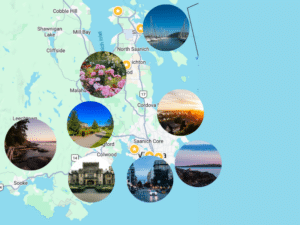 Greater Victoria may look compact on a map, but it does not feel like one single, uniform city when you are actually living in it. It feels more like a collection of mini communities, each with its own personality, pace, and everyday rhythm. One area might mean harbour walks, heritage buildings, and coffee shops around the corner. Another might mean newer homes, school drop-offs, rec centres, and a bit more breathing room.
That is part of what makes this region so appealing, but it can also make choosing where to live surprisingly tricky. A short drive can take you from a lively, walkable neighbourhood near downtown to a quiet suburban street or a coastal community that feels almost like a town of its own. For newcomers, that shift can be hard to understand until you start exploring in person.
 It helps to think of Greater Victoria in a few broad lifestyle zones. The Victoria core, including downtown, James Bay, and Fernwood, tends to appeal to people who want walkability, character, and easy access to restaurants, cafés, and the Inner Harbour. The Westshore, including Langford, Colwood, and View Royal, attracts people looking for newer developments, more space, and practical family amenities. Around Gordon Head and Upper Quadra, you get a more residential mix shaped by schools, parks, and proximity to UVic, while the Peninsula communities like Cordova Bay, Brentwood Bay, and Sidney offer a quieter, more coastal way of life.
The other piece newcomers often underestimate is the commute. Distances here can look short, but traffic patterns, especially between the Westshore and downtown, can change how a location feels on a daily basis. At the same time, remote and hybrid work have shifted the equation for many people, making lifestyle, scenery, and space just as important as driving time.
In the end, there is no single “best” neighbourhood in Greater Victoria. The right fit depends on how you want your days to look and feel. Whether you picture morning walks to a local café, easy access to schools and recreation, or a quieter home base near the water, there is a part of Greater Victoria that will feel more like you than the rest.
Quick Look: How to Choose Where to Stay
Want walkability and easy access → Downtown, James Bay
Want character and a local feel → Fairfield, Fernwood
Want quiet, established areas → Oak Bay, Gordon Head, Cordova Bay
Want close to downtown with more value → Esquimalt, View Royal
Want a coastal town feel → Sidney
Want farm country and a slower pace → Central Saanich, North Saanich, Brentwood Bay
Want space and newer homes → Langford, Colwood
Want nature and a more remote lifestyle → Metchosin, Sooke
Comparison Table
Most rental data in Greater Victoria reflects unfurnished apartments or long-term leases, typically for one- or two-bedroom condos or suites.
| Area | Vibe | Avg Monthly Rent* | Walkability | Commute to Downtown** | Best For |
|---|
| Downtown Victoria | Urban, lively, convenient | $2,000–$2,400 | High | None | Corporate stays, students, car-free living |
| James Bay | Residential, walkable, calm | $2,000–$2,300 | High | 5 – 20 min | Longer stays, professionals |
| Victoria West | Evolving, practical, close-in | $2,200–$2,500 | Medium | 5 – 20 min | Value near downtown, commuters |
| Fairfield | Relaxed, local, established | $2,000–$2,300 | High | 15 – 30 min | Families, longer stays |
| Fernwood | Creative, eclectic, community-focused | $1,800–$2,200 | Medium | 15 – 30 min | Students, creatives |
| Rockland | Historic, quiet, refined | $2,300–$2,800+ | Medium | 10 –30 min | Privacy, quiet living |
| Oak Bay | Established, polished, residential | $2,400–$3,000+ | Medium | 20 – 45 min | Families, upscale stays |
| Esquimalt | Practical, evolving, close-in | $1,900–$2,300 | Medium | 10–25 min | Value, families |
| Gordon Head | Residential, practical, family-friendly | $2,000–$2,400 | Medium | 20 – 45 min | Students, families |
| Cordova Bay | Coastal, quiet, scenic | $2,400–$3,200+ | Low–Medium | 20 – 45 min | Remote workers, coastal living |
| Sidney | Walkable, coastal, small-town | $2,000–$2,400 | High | 30 – 50 min | Retirees, remote workers |
| View Royal | Quiet, connected, practical | $1,900–$2,300 | Low–Medium | 10–20 min | Value, commuters |
| North Saanich | Rural, private, spacious | $2,500–$3,500+ | Low | 30 – 50 min | Privacy, nature |
| Central Saanich | Semi-rural, grounded, convenient | $2,100–$2,600 | Low–Medium | 20–30 min | Families |
| Brentwood Bay | Coastal village, relaxed | $2,100–$2,500 | Medium | 30 – 50 min | Quiet long stays |
| Langford | Suburban, active, growing | $1,900–$2,400 | Low | 25–45 min | Families, space |
| Colwood | Residential, coastal, expanding | $2,000–$2,500 | Low | 25–45 min | Families, space |
| Metchosin | Rural, quiet, agricultural | $2,300–$3,200+ | Low | 45–60 min | Privacy, nature |
| Sooke | Rugged, coastal, outdoorsy | $1,900–$2,400 | Low | 45–75 min | Nature-focused stays |
*Rental ranges are based on recent long-term market data for unfurnished apartments and condos. Furnished monthly stays, including fully equipped homes, utilities, and flexible terms, will vary depending on property type, season, and availability.
**Commute times are averages based on typical traffic behaviour.
For many longer stays, especially relocations, corporate assignments, or in-between moves, the difference comes down to ease.
Instead of sourcing furniture, setting up internet and utilities, and committing to a fixed lease, furnished rentals offer a more flexible option where everything is ready from day one. You can arrive, settle in, and focus on your stay rather than the logistics of setting up a home.
Getting Around Greater Victoria
 Getting around Greater Victoria is relatively easy, but how you move day to day will depend heavily on where you choose to stay.
Driving is the most common option, especially if you’re staying outside of the downtown core. Public transit is available throughout the region, but service can be limited depending on the area and may not always be the most efficient choice for daily commuting.
 Cycling is a strong option, particularly in the warmer months. The region has an extensive network of multi-use trails like the Galloping Goose and Lochside Trail, which connect many neighbourhoods and make it possible to commute or run errands by bike if you’re staying nearby.
The Reality of Commuting
If you’re planning to travel downtown regularly, it’s worth considering your commute carefully.
 One of the most well-known traffic patterns in the region is the “Colwood Crawl,” referring to congestion along the main route between the Westshore and downtown during peak hours. While communities like Langford and Colwood offer more space and newer homes, the trade-off can be a longer and less predictable commute.
Neighbourhoods closer to the city centre, such as Esquimalt, View Royal, and Fairfield, tend to offer easier day-to-day access with shorter travel times. Like most places, it comes down to what matters more for your stay: space and value, or proximity and convenience.
Living Here Day-to-Day
Choosing the right neighbourhood isn’t just about location. It’s about how your day-to-day life will actually feel while you’re here.
 For families
Access to parks, schools, and quieter residential streets often becomes a priority. Neighbourhoods with more space and a slower pace can make longer stays feel more settled and comfortable.

For remote workers and digital nomads
A balance of reliable internet, a comfortable workspace, and a peaceful environment can make a big difference. Areas that offer both access to amenities and a sense of calm tend to work well for longer stays.
For pet owners
 Walkability, nearby green space, and access to trails or beaches can shape your daily routine. Many neighbourhoods across Greater Victoria offer excellent outdoor access, but some are better suited than others depending on how you like to spend your time outside.
Downtown & Inner Harbour Living
 Urban, walkable, close to everything
If your priority is convenience and walkability, this is where you want to be. Daily life is compact and efficient, with restaurants, cafés, shops, and the waterfront all within a few blocks. This area is especially well suited for corporate travellers, short-term stays, and anyone who prefers not to rely on a car.
Downtown Victoria
Quick Look
- Best for: Walkability, corporate stays, short commutes
- Vibe: Urban, lively, convenient
- Walkability: Very high
- Commute to Downtown: None
Downtown Victoria is the most active and connected part of the city. Living here means stepping directly into restaurants, shops, and waterfront activity. It’s an energizing environment with a mix of professionals, visitors, and long-term renters.
For longer stays, it works best if convenience outweighs the need for space or quiet. Expect a faster pace, some noise, and limited parking, but unmatched access to everything.
James Bay
Quick Look
- Best for: Walkability with a quieter feel, coastal access
- Vibe: Historic, residential, relaxed
- Walkability: High
- Commute to Downtown: Minutes to downtown
James Bay sits just outside downtown but feels noticeably calmer. With tree-lined streets, heritage homes, and easy access to the waterfront and Beacon Hill Park, it offers a balanced, liveable environment.
For extended stays, it’s one of the strongest options if you want walkability without the intensity of downtown living.
Victoria West (Vic West)
Quick Look
- Best for: Proximity to downtown with more space
- Vibe: Residential, evolving
- Walkability: Moderate
- Commute to Downtown: 5 to 10 minutes
Located just across the harbour, Vic West offers quick access to downtown with a slightly more relaxed feel. Newer condo developments and waterfront paths make it increasingly popular for longer stays.
It’s a practical option if you want to stay close to the action without being directly in it.
Character Neighbourhoods Close to Downtown
 Established, local feel, highly livable
These neighbourhoods offer a more residential experience while still keeping downtown within easy reach. This is where many locals choose to live, with a stronger sense of community and more day-to-day comfort.
Fairfield
Quick Look
- Best for: Families, walkability, access to parks
- Vibe: Quiet, established, residential
- Walkability: High
- Commute to Downtown: 5 to 10 minutes
Fairfield is one of the most consistently desirable neighbourhoods in Victoria. With access to Beacon Hill Park and the waterfront, it offers a calm, balanced lifestyle close to downtown.
For longer stays, it’s ideal if you want a neighbourhood that feels settled and easy to live in.
Fernwood
Quick Look
- Best for: Creatives, young professionals
- Vibe: Artsy, community-focused
- Walkability: Moderate to high
- Commute to Downtown: 5 to 10 minutes
Fernwood has a distinct personality, centred around a small village hub with cafés, bakeries, and local events. It’s slightly less polished than other areas, but that’s part of its appeal.
It’s a strong choice if you’re looking for character and a neighbourhood with a social, creative energy.
Rockland
Quick Look
- Best for: Quiet living, historic homes
- Vibe: Upscale, peaceful
- Walkability: Moderate
- Commute to Downtown: 5 to 10 minutes
Rockland is known for its larger homes and quiet, tree-lined streets. It feels more removed despite being close to downtown.
For extended stays, it suits those who prioritize privacy and a calm environment over walkability.
Oak Bay
Quick Look
- Best for: Long-term stays, coastal access
- Vibe: Established, refined
- Walkability: Moderate
- Commute to Downtown: 10 to 15 minutes
Oak Bay offers a traditional neighbourhood feel with access to the ocean and a strong sense of community. It feels slightly separate from the city, even though it’s close by.
It’s ideal for longer stays where routine, comfort, and a slower pace matter.
Esquimalt
Quick Look
- Best for: Value, proximity to downtown
- Vibe: Transitional, community-focused
- Walkability: Moderate
- Commute to Downtown: 5 to 10 minutes
Esquimalt is evolving quickly, with new cafés, breweries, and waterfront access shaping the area. It offers strong value while keeping you close to downtown.
It’s a practical choice for longer stays, especially if budget and location are priorities.
Coastal & Residential Areas Near the City
Water access, quieter pace, still connected
These areas offer a balance between city access and coastal living, with a slower pace and more space.
Gordon Head
Quick Look
- Best for: Families, students
- Vibe: Residential, practical
- Walkability: Moderate
- Commute to Downtown: 15 to 25 minutes
Gordon Head is a well-established neighbourhood near UVic, with access to parks, beaches, and everyday essentials.
It works well for longer stays where function, space, and access to amenities matter.
Cordova Bay
Quick Look
- Best for: Coastal living, quiet lifestyle
- Vibe: Scenic, calm
- Walkability: Low to moderate
- Commute to Downtown: 20 to 30 minutes
Cordova Bay is more lifestyle-driven, with ocean views, beach access, and a quieter pace. Daily life here is centred around outdoor routines rather than urban convenience.
It’s ideal if you want to prioritize environment over walkability.
View Royal
Quick Look
- Best for: Central location, value
- Vibe: Quiet, practical
- Walkability: Moderate
- Commute to Downtown: 10 to 20 minutes
View Royal sits between downtown and the Westshore, making it one of the most strategically located areas.
For longer stays, it offers a reliable, central base without the higher cost of more in-demand neighbourhoods.
Saanich Peninsula & Farm Country Living
 Agricultural, slower pace, connected rural living
The Peninsula offers a quieter, more grounded lifestyle shaped by farmland, coastal views, and smaller communities. It’s ideal for those who want space without being completely disconnected.
North Saanich
Quick Look
- Best for: Privacy, space, coastal living
- Vibe: Rural, quiet
- Walkability: Low
- Commute to Downtown: 25 to 40 minutes
North Saanich offers large properties, ocean views, and a strong sense of privacy. It feels removed from the city in a way that appeals to those seeking quiet.
Best suited for longer stays where space and calm are priorities.
Central Saanich
Quick Look
- Best for: Balance, families
- Vibe: Semi-rural, community-oriented
- Walkability: Low to moderate
- Commute to Downtown: 20 to 30 minutes
Central Saanich blends rural living with everyday convenience. It’s a comfortable middle ground with access to essential services.
A strong option for relocations or extended stays.
Brentwood Bay
Quick Look
- Best for: Village feel, coastal access
- Vibe: Small-town, connected
- Walkability: Moderate
- Commute to Downtown: 25 to 35 minutes
Brentwood Bay offers a true village atmosphere with a walkable core, marina access, and a strong sense of community.
It’s one of the more livable Peninsula options for longer stays.
Sidney
Quick Look
- Best for: Walkable coastal living
- Vibe: Small-town, seaside
- Walkability: High
- Commute to Downtown: 25 to 40 minutes
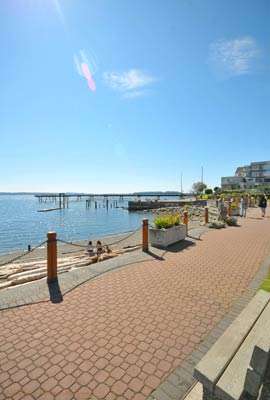
Sidney stands out for its walkability and self-contained feel. With shops, cafés, and the waterfront all nearby, it offers an easy, relaxed lifestyle.
It’s especially appealing for longer stays where you want to live without relying heavily on a car.
Westshore Communities
 Newer development, more space, value trade-offs
The Westshore is where much of Victoria’s growth is happening, offering newer homes and more space at a lower price point.
Langford
Quick Look
- Best for: Families, space, newer homes
- Vibe: Suburban, growing
- Walkability: Moderate
- Commute to Downtown: 25 to 45 minutes
Langford is built around convenience, with shopping, recreation, and services all close by.
It’s ideal for longer stays where space and practicality are priorities.
Colwood
Quick Look
- Best for: Coastal access, quieter pace
- Vibe: Residential, expanding
- Walkability: Moderate
- Commute to Downtown: 30 to 45 minutes
Colwood offers a slightly quieter alternative to Langford, with coastal access and growing residential communities.
It’s a good fit for those who want space with a more relaxed pace.
West Coast & Rural Living
 Nature-first, remote, lifestyle-driven
These areas offer a completely different experience, focused on nature, space, and a slower way of living.
Metchosin
Quick Look
- Best for: Privacy seekers, remote workers
- Vibe: Rural, agricultural, quiet
- Walkability: Low
- Commute: 30 to 50 minutes
Metchosin is one of the most rural areas in Greater Victoria, defined by farmland, forest, and open space.
Daily life requires planning, with limited services nearby, but the trade-off is privacy and a strong connection to the landscape.
Sooke
Quick Look
- Best for: Outdoor lifestyle, ocean views
- Vibe: Rugged, coastal, laid-back
- Walkability: Low
- Commute: 45 to 75 minutes
Sooke sits at the edge of Greater Victoria, where nature becomes the main focus. Life here revolves around beaches, forests, and outdoor exploration.
It’s best suited for longer stays where lifestyle and environment matter more than convenience.
Where to Stay While You Explore Victoria
 One of the best ways to choose the right neighbourhood is to experience it firsthand. Staying in a furnished rental allows you to explore different areas while maintaining comfort and flexibility, whether you want to test out urban living, a quieter coastal setting, or a more family-oriented community.
EMR Vacation Rentals offers professionally managed homes across Greater Victoria, including downtown Victoria, Sidney, Langford and the Westshore, and Sooke. You can also browse by stay type, whether you are looking for condos, houses, or longer-term monthly furnished rentals.
Find the Home You’re Looking For
Ready to explore your options? Browse EMR Vacation Rentals’ full collection of professionally managed homes across Greater Victoria and Vancouver Island.